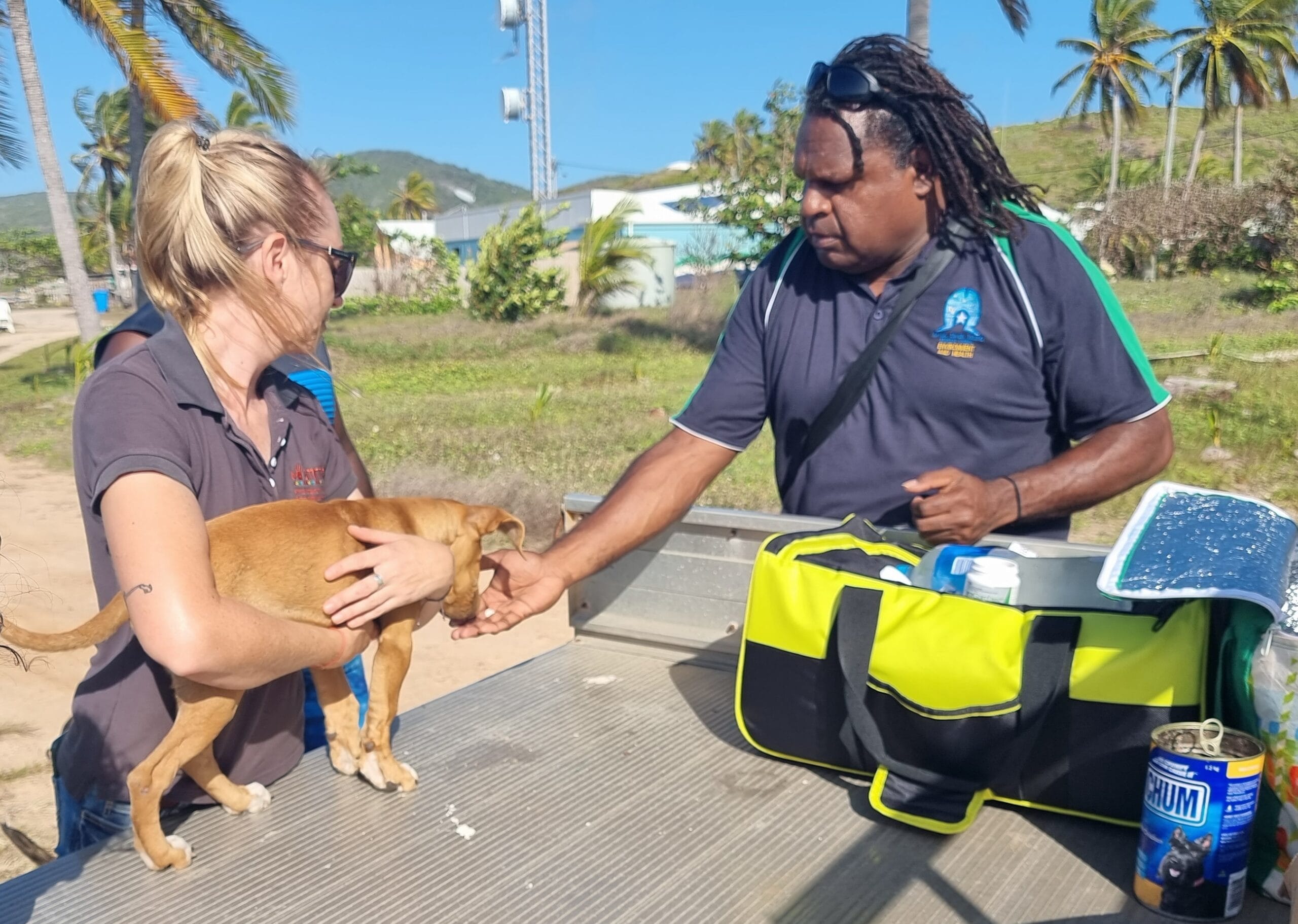
This National Biosecurity Week, AMRRIC is proud to launch the evaluation of our three-year Biosecurity Pilot Project, which ran from 2022 – 2024 and was delivered in partnership with remote Indigenous communities across Northern Australia.
The project, funded by the Australian Government’s Biosecurity Business Grants Program, set out to improve companion animal health surveillance in some of Australia’s most remote regions – places where distance, access, and limited veterinary services make early detection of animal disease incredibly challenging.
Building capacity, improving health
Over three years, the project:
- Reached 25 remote Aboriginal and Torres Strait Islander communities across Northern Australia.
- Delivered 41 community-wide biosecurity surveillance events.
- Surveyed almost 8,000 animals, with more than 7,300 treated for parasites and health conditions.
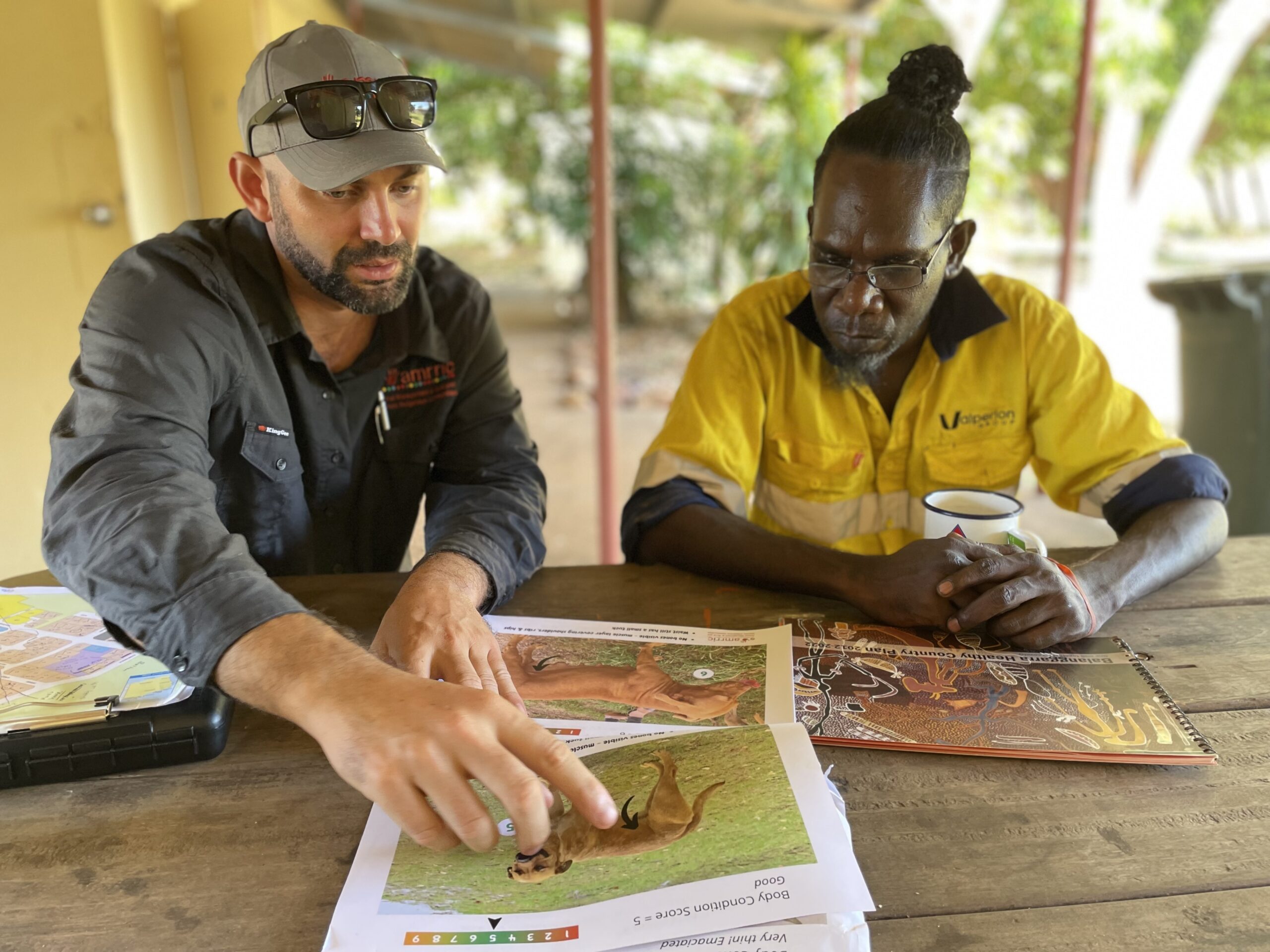
- Provided 126 participants with tailored biosecurity training, including Indigenous Rangers and Environmental Health Workers.
- Generated 328 Indigenous employment days, with an additional 292 leveraged through partnerships with the Australian Government Northern Australian Quarantine Strategy.
The project adhered to the principle of “no survey without service” – ensuring that every surveillance event also delivered immediate benefits for animals and their owners. This approach not only strengthened surveillance but also built trust and participation at the community level.
Voices from community
Community feedback highlighted the project’s impact:
“Demonstrating tangible improvements in animal health builds trust and engagement. When community members see the positive impact on their animals, they are more likely to support and actively participate in biosecurity efforts.” – Community partner survey response
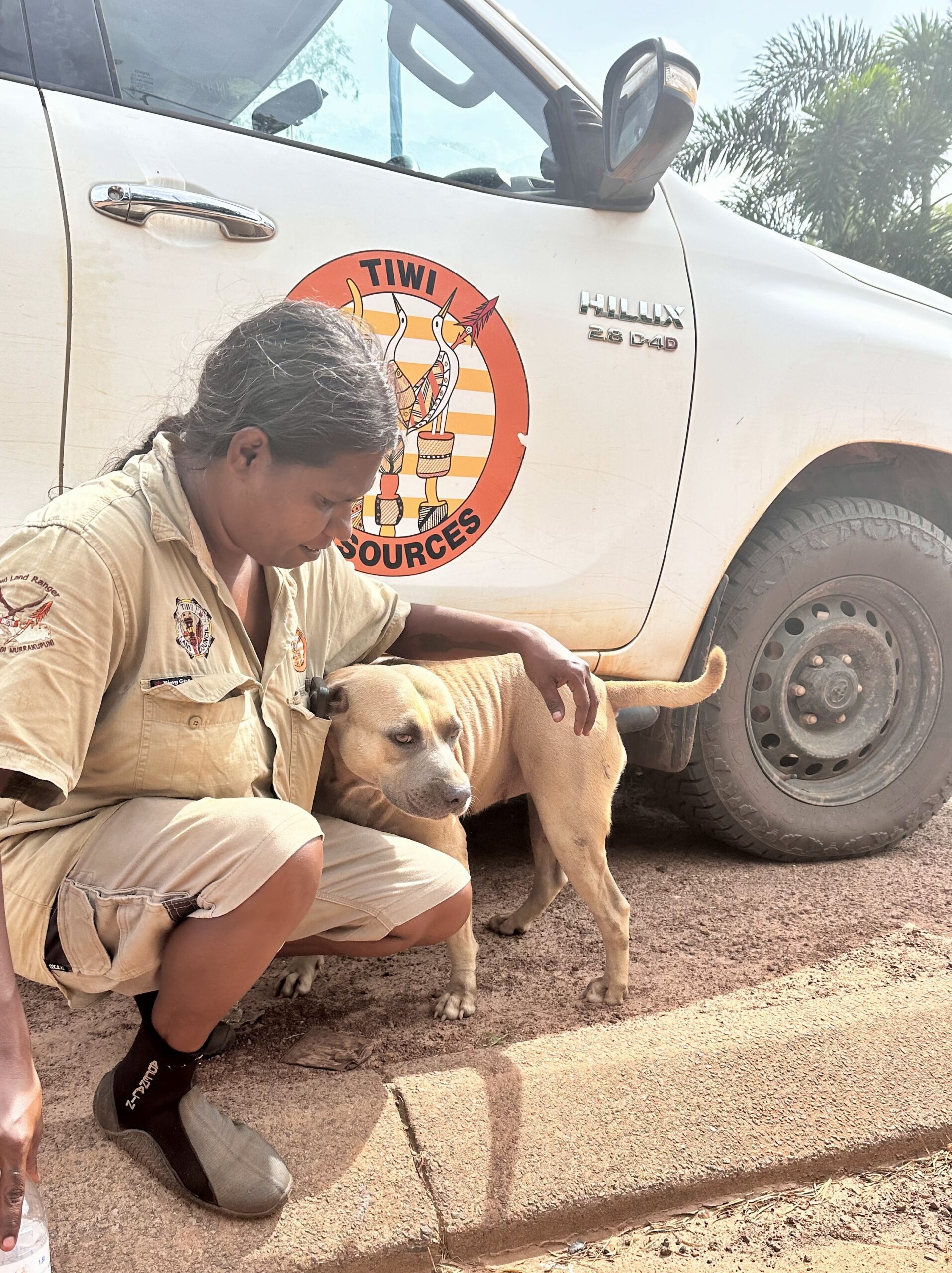
Tiwi Ranger Nikita Puruntatameri, who took part in training and census activities, shared how the project built both skills and confidence:
“Biosecurity means everything to us on the island. I had no idea how to treat animals or report biosecurity issues before the training. Now the community comes to us for help – asking for medicine or advice when their animals are sick.”
Strong results, stronger future
The evaluation shows the project achieved all of its anticipated outcomes, exceeding expectations in several areas:
- Improved community animal health and biosecurity surveillance capacity.
- Strengthened collaboration between Indigenous organisations, local governments, and health agencies.
- 84.6% of community partner funding went to Indigenous-controlled organisations, with the remainder directed to local government authorities in remote regions with predominantly Indigenous populations.
- Leveraged an additional 35 cents of value for every grant dollar through partner contributions.
Community partners strongly endorsed the project’s model, recommending that it be continued and expanded with greater frequency and duration.
Looking ahead
As Australia faces ongoing risks from diseases such as rabies and African swine fever, AMRRIC’s Biosecurity Pilot Project demonstrates the vital role of community-driven, culturally appropriate animal health programs in safeguarding both biosecurity and community wellbeing.
This National Biosecurity Week, AMRRIC celebrates the success of this project and the dedication of the many Indigenous organisations, rangers, councils, health workers, and veterinary teams who made it possible.
👉 Read the full evaluation report here
