Environmental Health Workers across the Torres Strait are putting new training and education resources into practice, delivering locally led sessions that connect responsible pet ownership and animal health with protecting communities, wildlife and the environment.
The recent school sessions build on the Building Biosecurity Capacity on the Torres Strait Islands project, delivered by AMRRIC in partnership with Torres Strait Island Regional Council (TSIRC) through the Queensland Biosecurity Grants Program – Education.
The project aimed to equip TSIRC Environmental Health Workers (EHWs) with the skills, confidence and practical resources to deliver culturally and contextually relevant animal health and biosecurity education within their own communities. It built on a strong existing partnership between AMRRIC and TSIRC, including collaboration through AMRRIC’s three-year Biosecurity Pilot Project.
Practical resources shaped by local priorities
Working with the EHW team, AMRRIC identified responsible pet ownership, desexing and animal biosecurity as priority education topics. This reflects the important connection between companion animal management and biosecurity: healthy, well-managed pets can help reduce risks from infectious diseases, parasites and invasive species that can affect people, other animals and wildlife.
AMRRIC developed two practical education sessions—Responsible Pet Ownership and the Importance of Desexing—supported by lesson plans, instructional videos, animations and hands-on activity materials. Two brochures were also developed for use in schools and the wider community, including information about animal biosecurity and responsible pet ownership.
Physical education kits were supplied for use across the region, alongside training for the EHW team. Fifteen EHWs participated in Responsible Pet Ownership training and 19 in training on the Importance of Desexing.
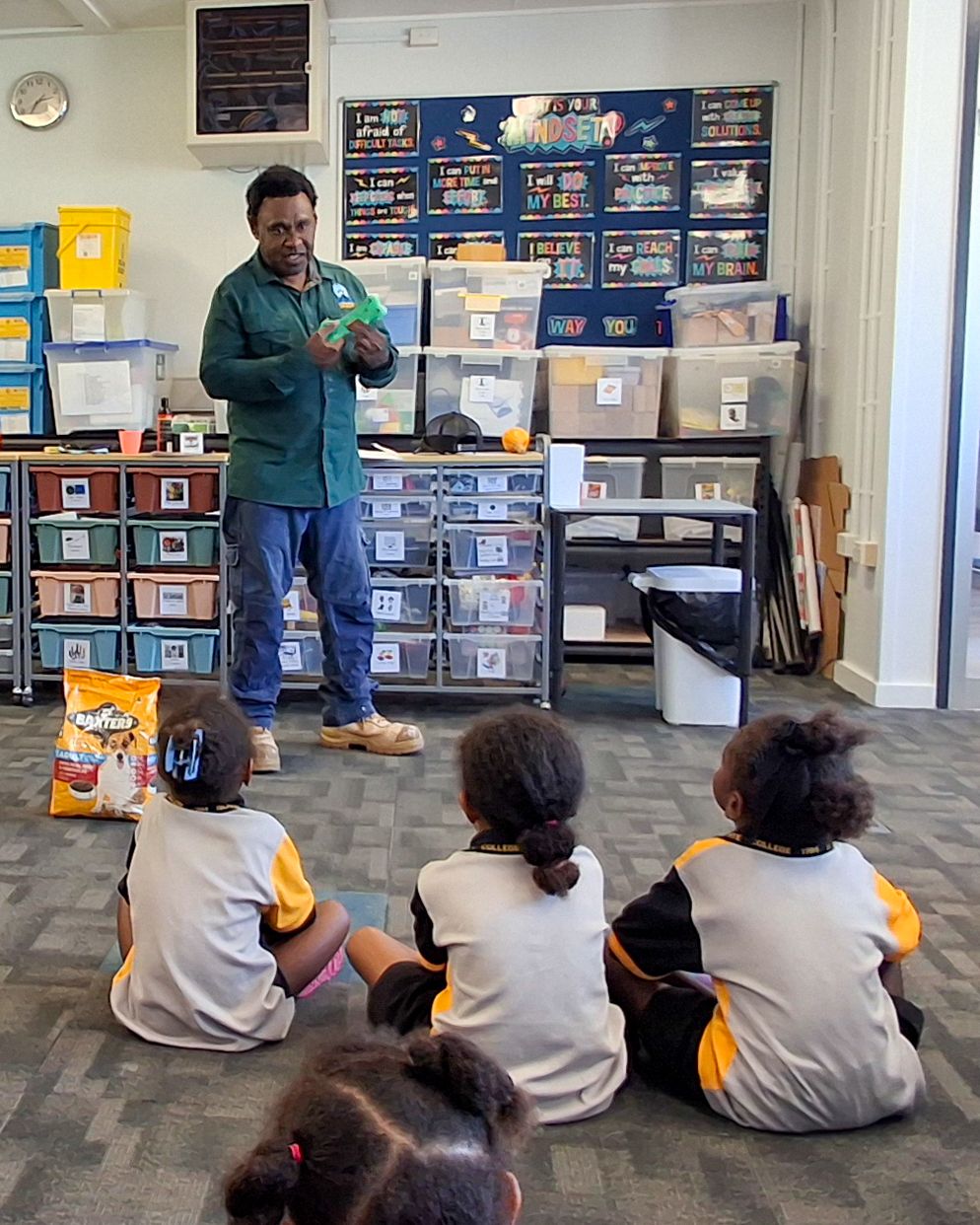
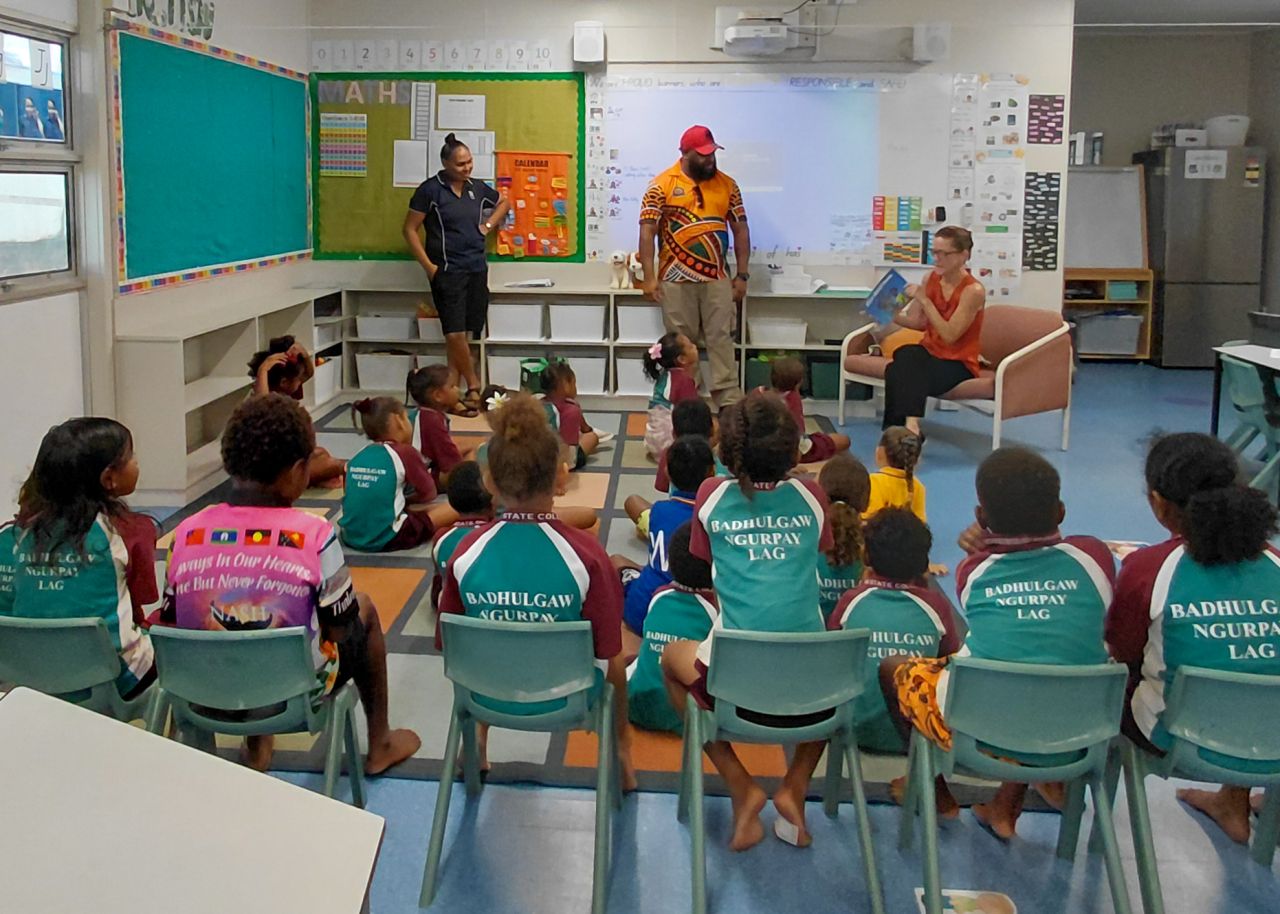
TSIRC EHW’s delivering school education on responsible pet ownership following training provided by AMRRIC as part of a project supported through the Queensland Biosecurity Grants Program – Education.
From training to locally led education
Importantly, the project was designed not just to deliver education, but to build local capability to continue delivering it.
Prior to the project, the majority of TSIRC’s EHW team had not undertaken school education sessions. During the project, EHWs began taking the new resources into local primary schools. Responsible Pet Ownership sessions captured through the project evaluation reached 82 students, 13 teachers and 22 teacher aides, with participating EHWs reporting strong student engagement.
Teachers also responded positively, describing the program as “engaging, relevant and led professionally” and expressing interest in ongoing sessions.
TSIRC managers identified increased EHW confidence and having practical tools available to support lesson delivery as important outcomes of the project.
Continuing beyond the project
Although the funded project has now concluded, its resources and capability remain with the EHW team. Recent TSIRC school sessions show these tools continuing to be used to build awareness of responsible pet ownership and biosecurity across the Torres Strait.
This is an important part of the project’s longer-term impact: supporting local people with practical skills and resources they can continue to use within their own communities.
AMRRIC thanks the TSIRC Environmental Health Worker team for their partnership and commitment throughout the project.
The Building Biosecurity Capacity on the Torres Strait Islands project was supported by the Queensland Government through the Queensland Biosecurity Grants Program – Education.
