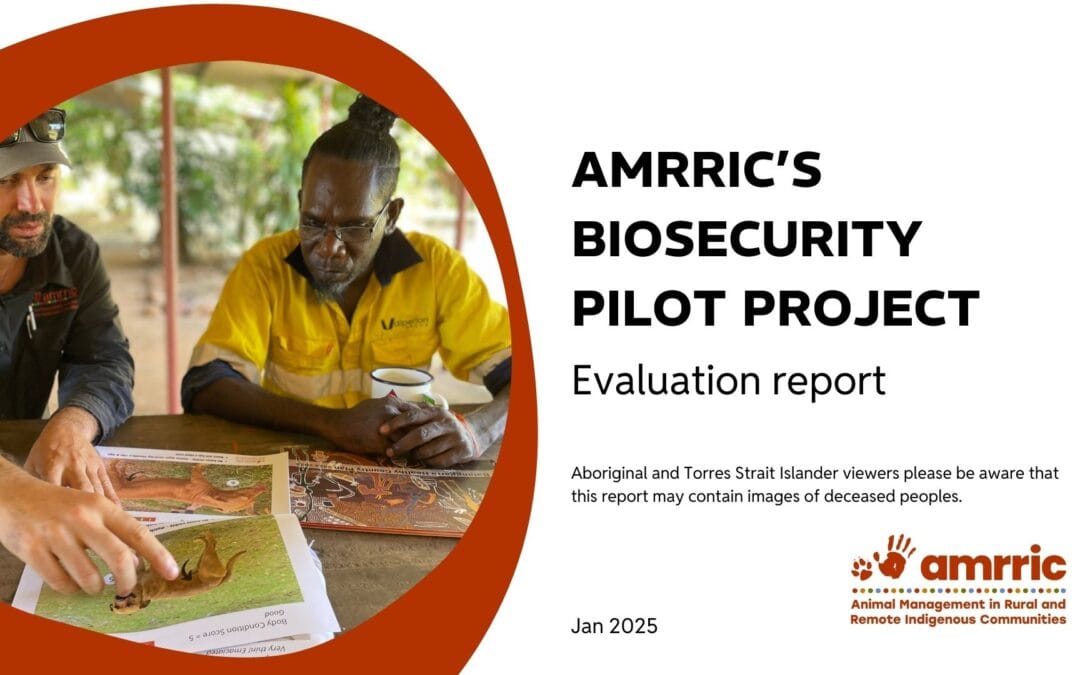
Strengthening Biosecurity in Remote Indigenous Communities: AMRRIC’s Pilot Project highlights the benefits of a new model of surveillance
From 2021–2024, AMRRIC delivered the Biosecurity Pilot Project across 25 remote Aboriginal and Torres Strait Islander communities in Northern Australia. Funded through the Australian Government’s Biosecurity Business Grants Program, the project aimed to strengthen animal biosecurity surveillance, improve animal health, and create Indigenous employment opportunities by working in partnership with local organisations.
Through 41 community-wide animal health censuses, the project trained 126 participants, generated 328 Indigenous employment days, and provided treatment and first aid to nearly 7,400 animals. A strong focus on “no survey without service” and Indigenous Data Sovereignty ensured that data collection was always paired with direct community benefit.
The evaluation report, authored by AMRRIC’s Head of Innovation and Strategy Dr Bonny Cumming, draws on multiple data sources, including project records, AMRRIC App surveillance data, staff reflections, training participant feedback, and an end-of-project partner survey. It provides both quantitative outcomes and rich qualitative insights, including a personal impact story from a Tiwi Ranger involved in the project.
The evaluation found that the project:
-
Achieved or exceeded all anticipated outcomes.
-
Improved animal health and strengthened local capacity for biosecurity surveillance.
-
Directed 84.6% of community partner funding to Indigenous-controlled organisations.
-
Generated significant additional value, leveraging 35 cents for every dollar invested.
Community feedback overwhelmingly supported the approach, with calls for longer-term and more frequent delivery.
