Our Approach to Training
AMRRIC has been working in animal health and management in partnership with remote Indigenous communities for over 25 years, supporting the health and wellbeing of people, animals, Country and culture.
From the outset, AMRRIC recognised that effective animal management in remote Indigenous communities requires training that reflects local contexts, cultures and service delivery realities.
Building a Local Workforce
In 2011, AMRRIC partnered with Regional Councils in the Northern Territory to establish the Animal Management Worker Program.
This program aimed to:
- Improve companion animal, environmental and human health
- Develop a sustainable, locally based workforce
- Support community ownership of animal management programs
This work highlighted that existing training qualifications did not align with remote community contexts.
Responding to the Training Gap
In response, AMRRIC:
- Delivered non-accredited, context-specific training
- Advocated for the development of relevant accredited training pathways
AMRRIC’s sustained advocacy over approximately a decade led to the development of new units of competency specific to remote Indigenous animal management, which now underpin AMRRIC’s accredited training offerings.
Training in Practice
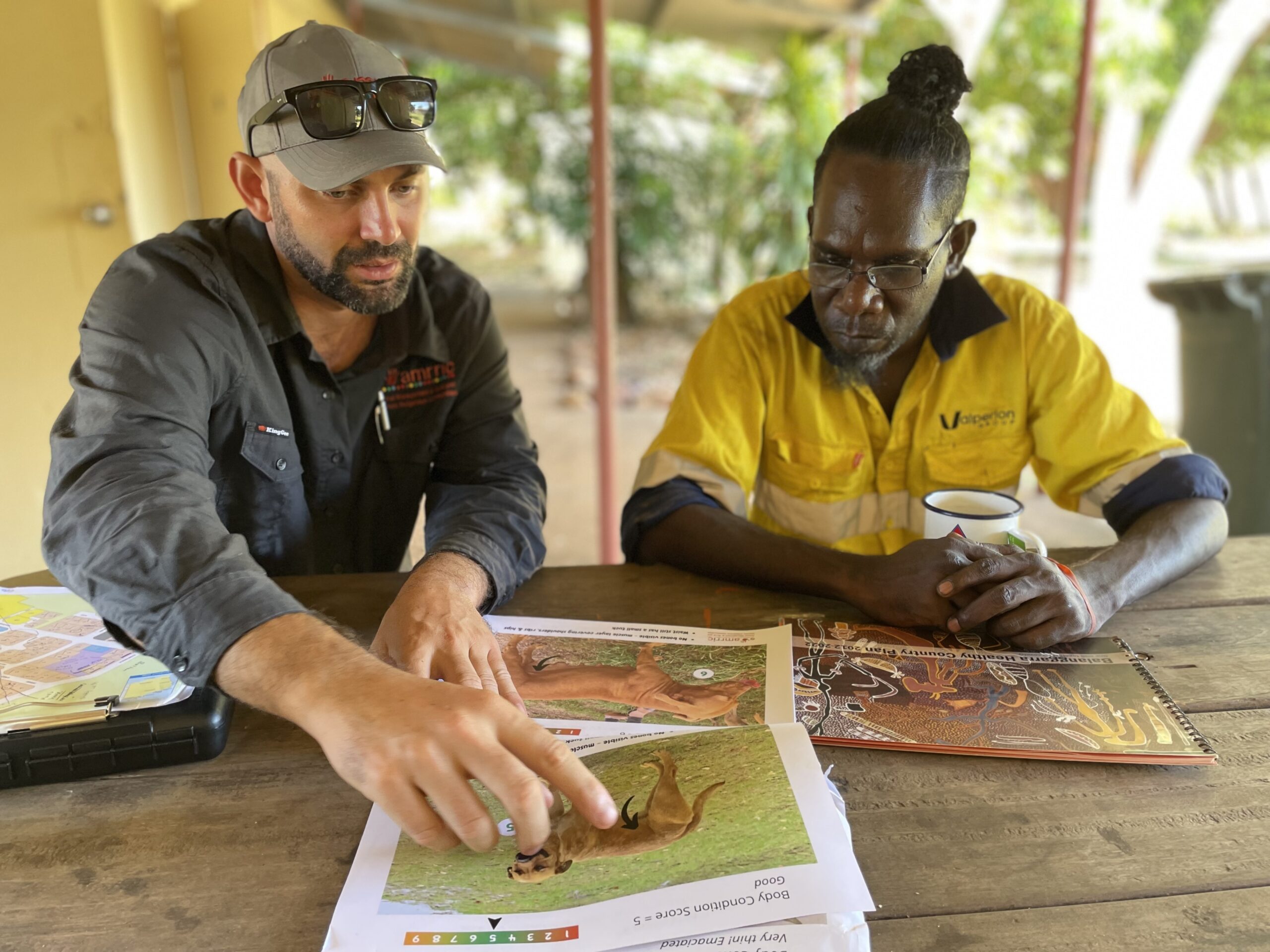
AMRRIC’s training is grounded in practical, on-ground delivery.
Training is often integrated with real program activities such as:
- Animal population censuses
- Veterinary visits
- Community engagement activities
This approach ensures:
- Learning is immediately applied
- Participants build confidence through practice
- Communities see tangible benefits alongside training
This also reflects AMRRIC’s principle of “no survey without service”.
Example in Practice: AMRRIC's Biosecurity Pilot Project
AMRRIC’s Biosecurity Pilot Project (2021–2024) demonstrated this approach in action.
Through this project:
- Training was delivered alongside community-wide animal health activities
- Local participants developed skills in biosecurity surveillance
- Partnerships with LGAs, Ranger groups and community organisations were strengthened
The project reinforced the importance of:
- Hands-on, on-ground training
- Culturally appropriate delivery
- Integration of training with service provision
A One Health Approach

All AMRRIC training is grounded in a One Health approach, recognising that:
- animal health
- community health and wellbeing
- environmental and ecosystem health
are interconnected.
By building local capacity in animal management, training contributes to:
- healthier Animals
- safer communities
- stronger biosecurity systems, and
- improved wellbeing.
Our committment
AMRRIC’s approach is guided by our core values of Respect, Connect and Impact, and our commitment to working in genuine partnership with communities.
Our training is designed to support long-term, sustainable outcomes that are community-led and locally embedded.
Talk to us
We work with organisations to design training solutions aligned to your community context, workforce and program goals.
📧 info@amrric.org
📞 08 8948 1768
🔗 www.amrric.org/contact