
Campylobacteriosis or campylobacter infection is a gut disease caused by Campylobacter bacteria. This bacterium is one of the most common causes of gut problems in people in Australia. Campylobacter is a zoonotic disease, which means that it can spread to people from animals or animal products.
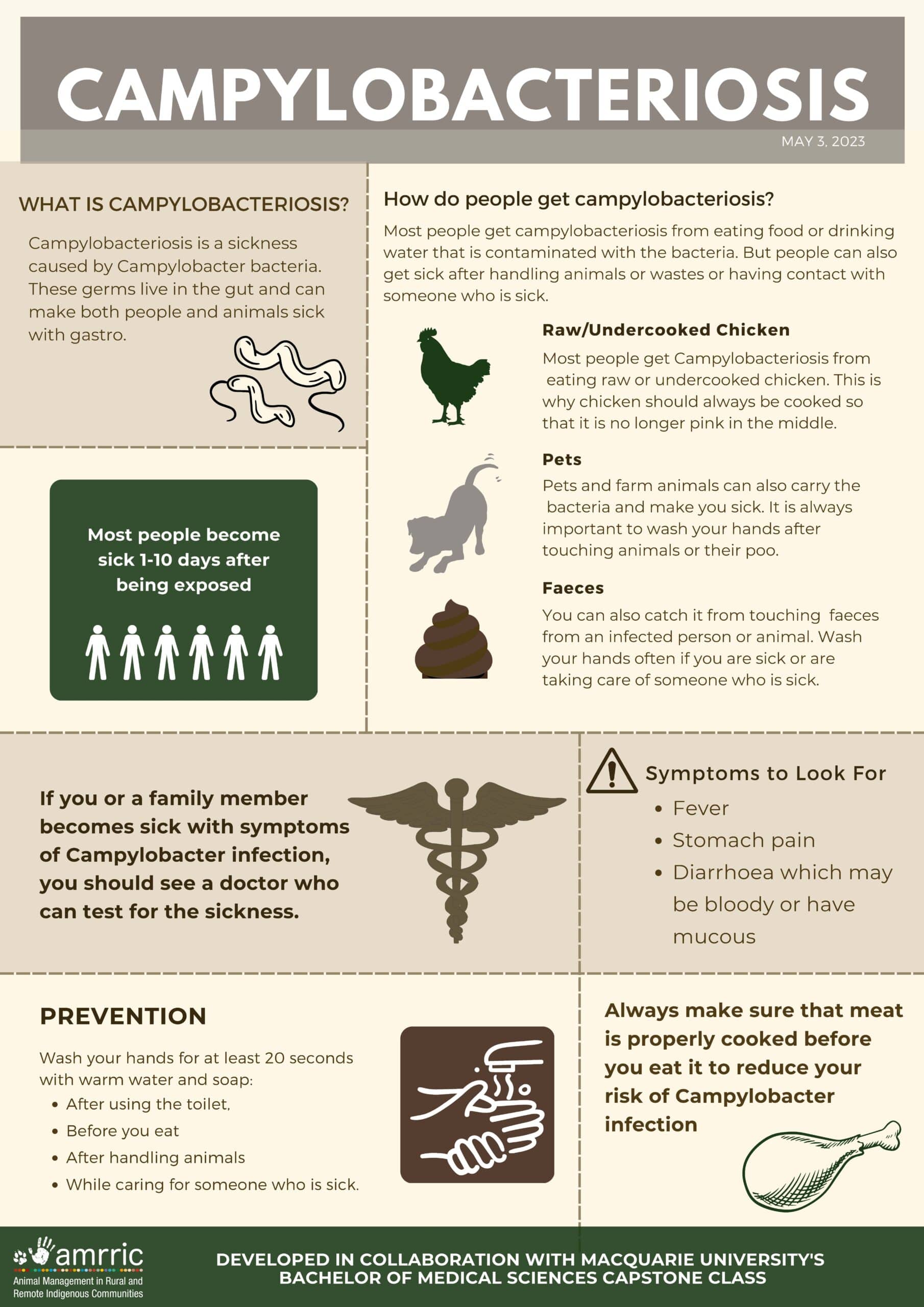
This fact sheet was developed by students in Macquarie University’s 2022 Medical Sciences Capstone/PACE subject major industry partnership project. The following references were provided by the students who developed the fact sheet:
Campagnolo, E. R., Philipp, L. M., Long, J. M., & Hanshaw, N. L. 2018. Pet-associated Campylobacteriosis: A persisting public health concern. Zoonoses Public Health, 65, 304-311. https://doi.org/10.1111/zph.12389.
Skarp, C. P. A., Hannien, M. L., & Rautelin, H. I. K. 2016. Campylobacteriosis: the role of poultry meat. Clinical Microbiology and Infection, 22, 103-109. http://dx.doi.org/10.1016/j.cmi.2015.11.019.
Whiley, H., Van Den Akker, B., Giglio, S., & Bentham, R. 2013. The Role of Environmental Reservoirs in Human Campylobacteriosis. International Journal of Environmental Research and Public Health, 10, 5886-5907. https://doi.org/10.3390/ijerph10115886.
World Health Organisation (WHO). 2020. Campylobacter. World Health Organisation. https://www.who.int/news-room/fact-sheets/detail/campylobacter.
